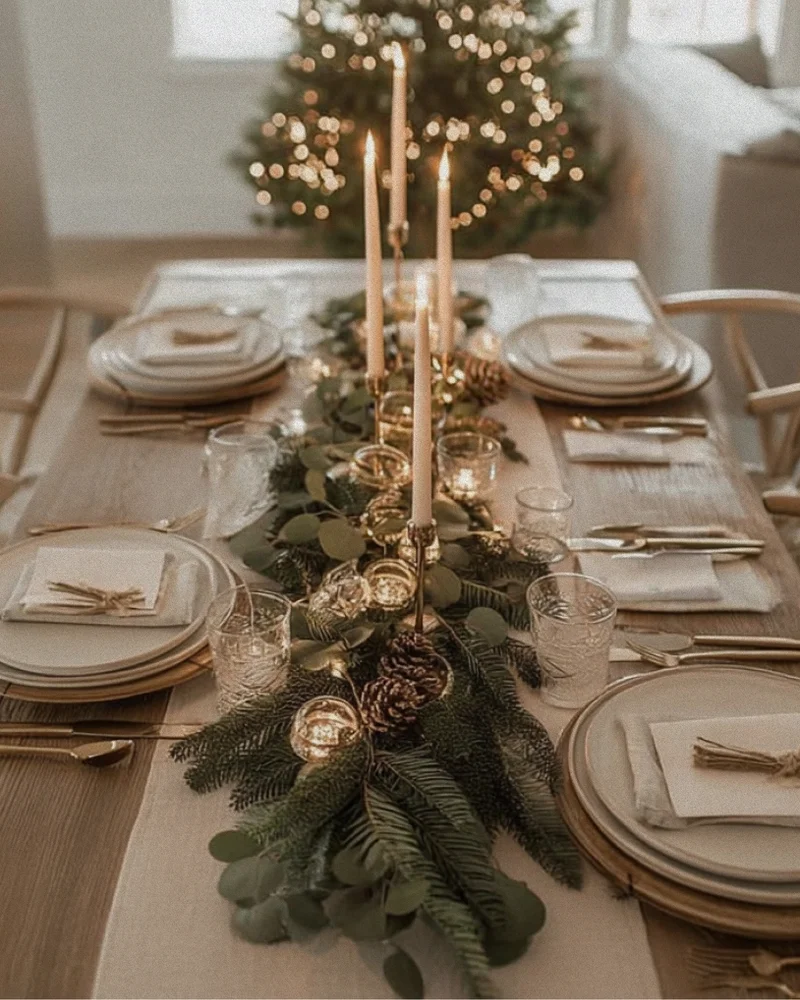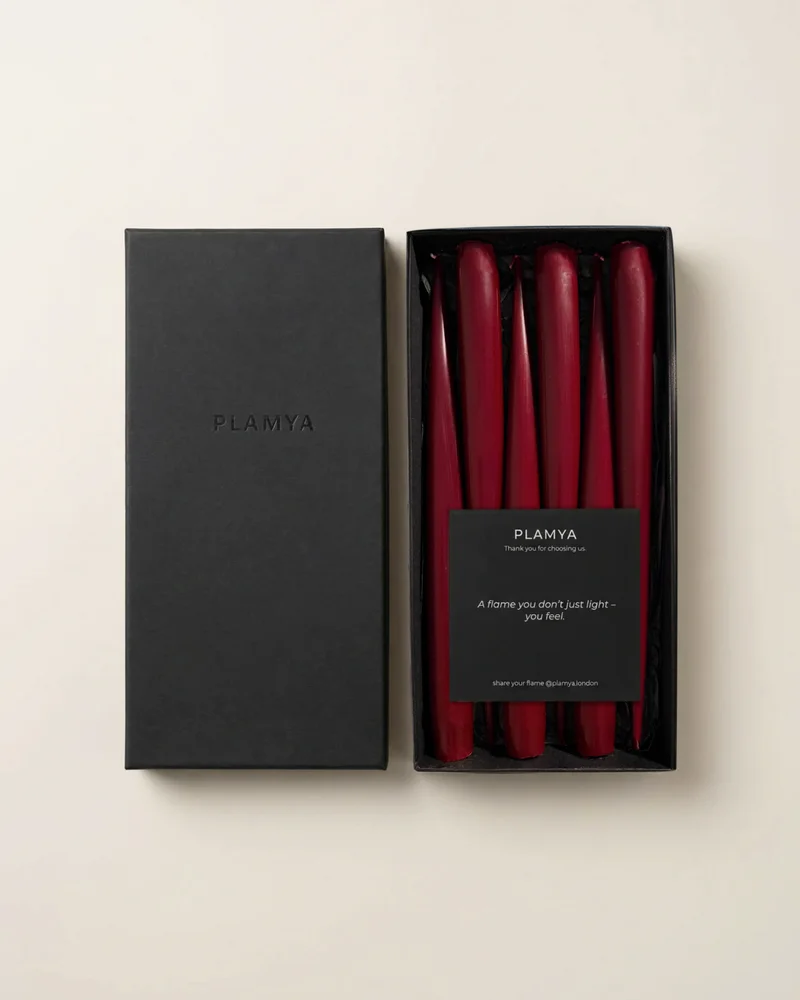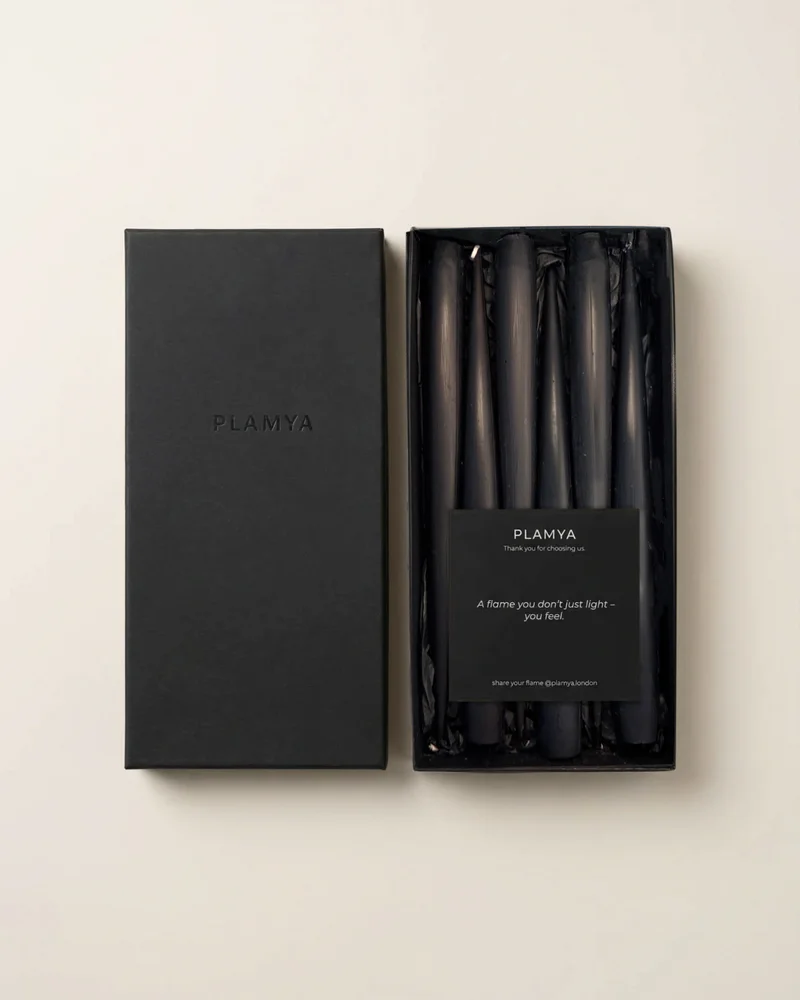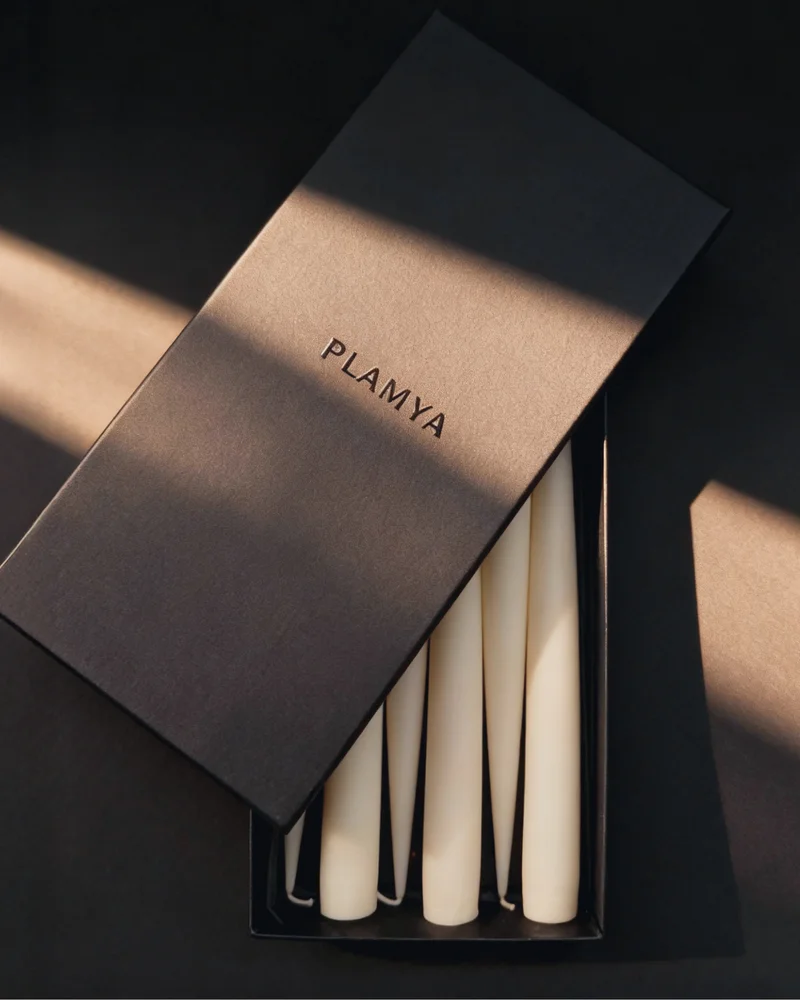
PLAMYA is a studio creating candles shaped by colour, nature and the spaces they inhabit. The collections range from minimal taper candles to tactile forms inspired by natural landscapes. Each candle is developed and hand-finished in London. The focus is on creating objects that bring colour, light and character into everyday interiors.
The Original Palette
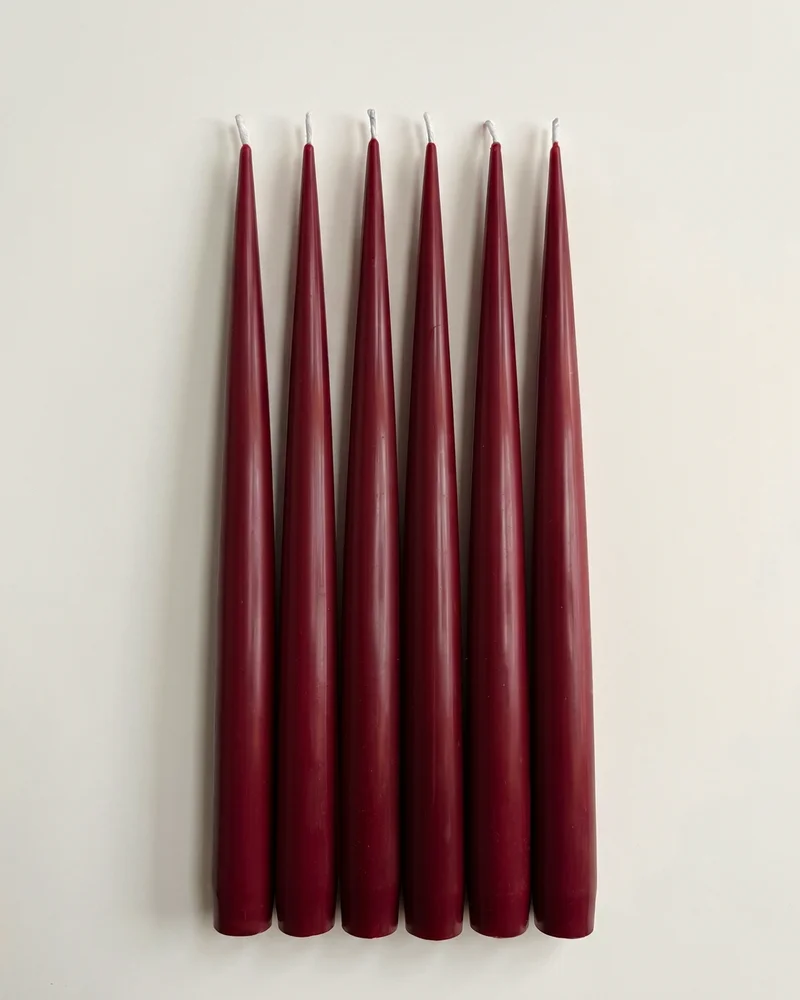
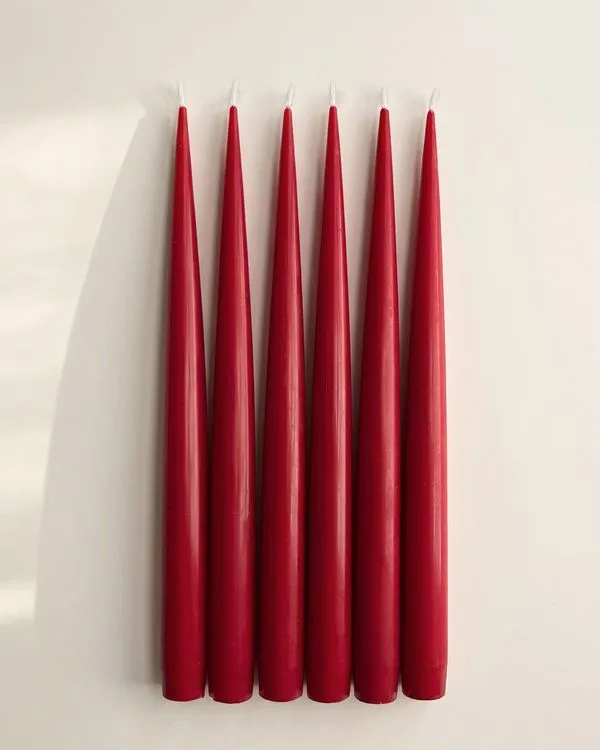
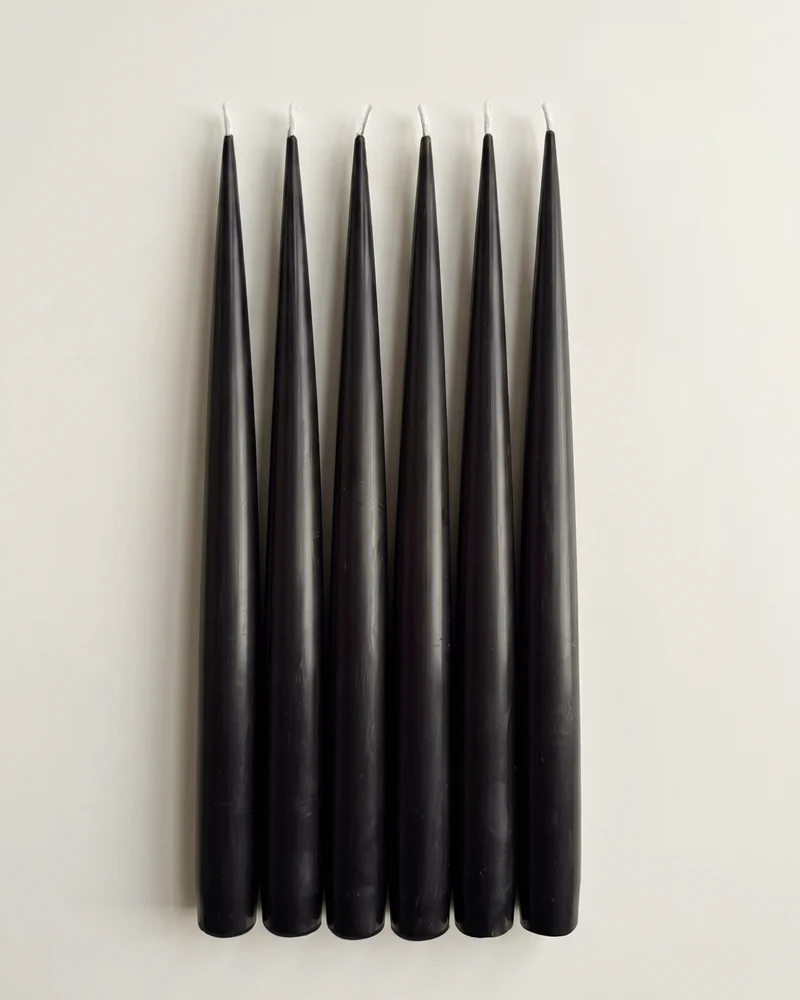
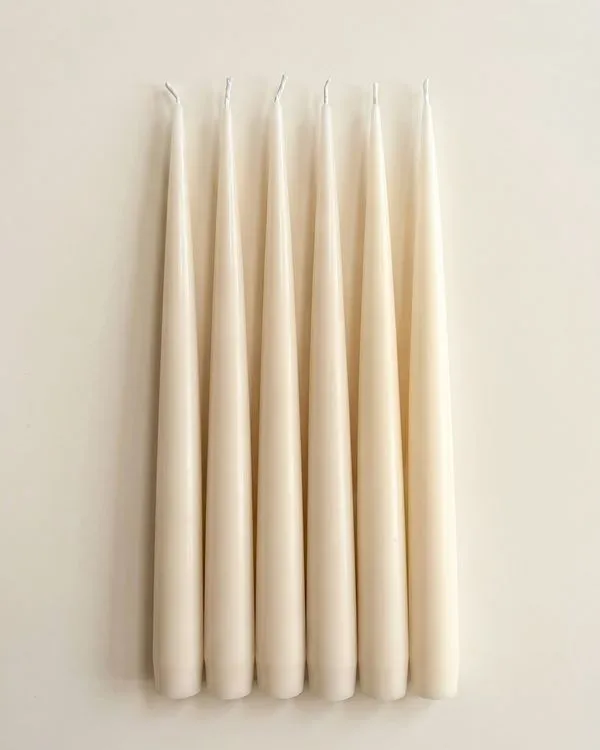
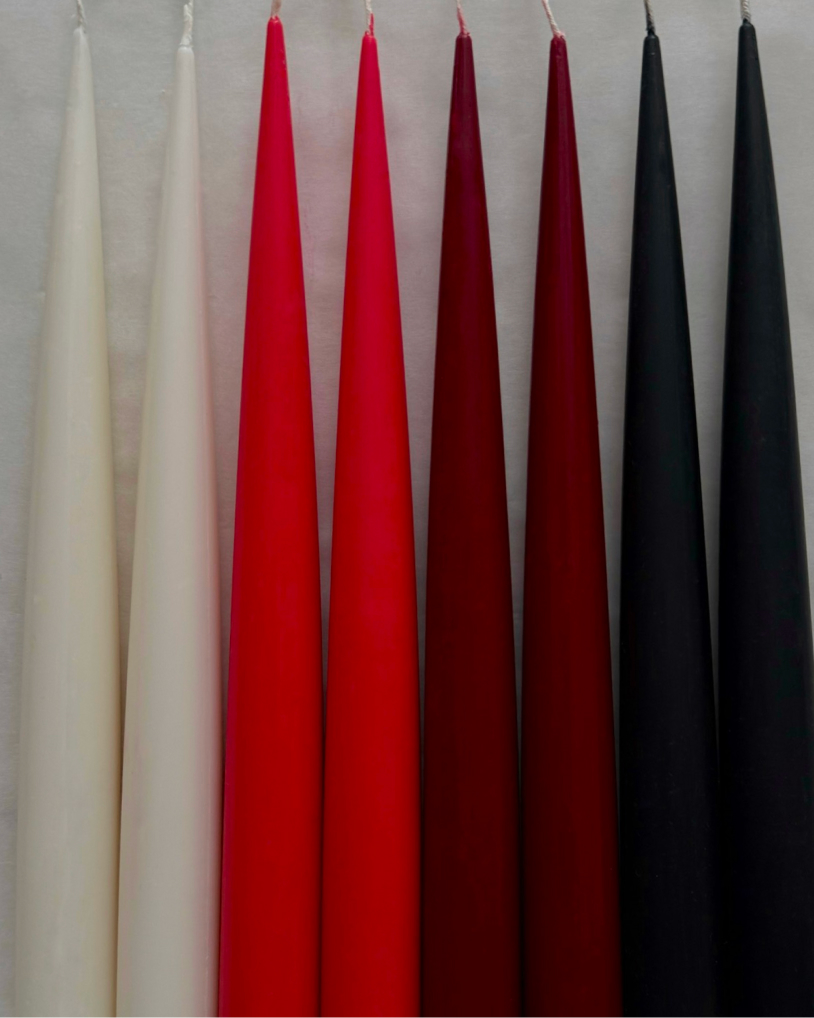
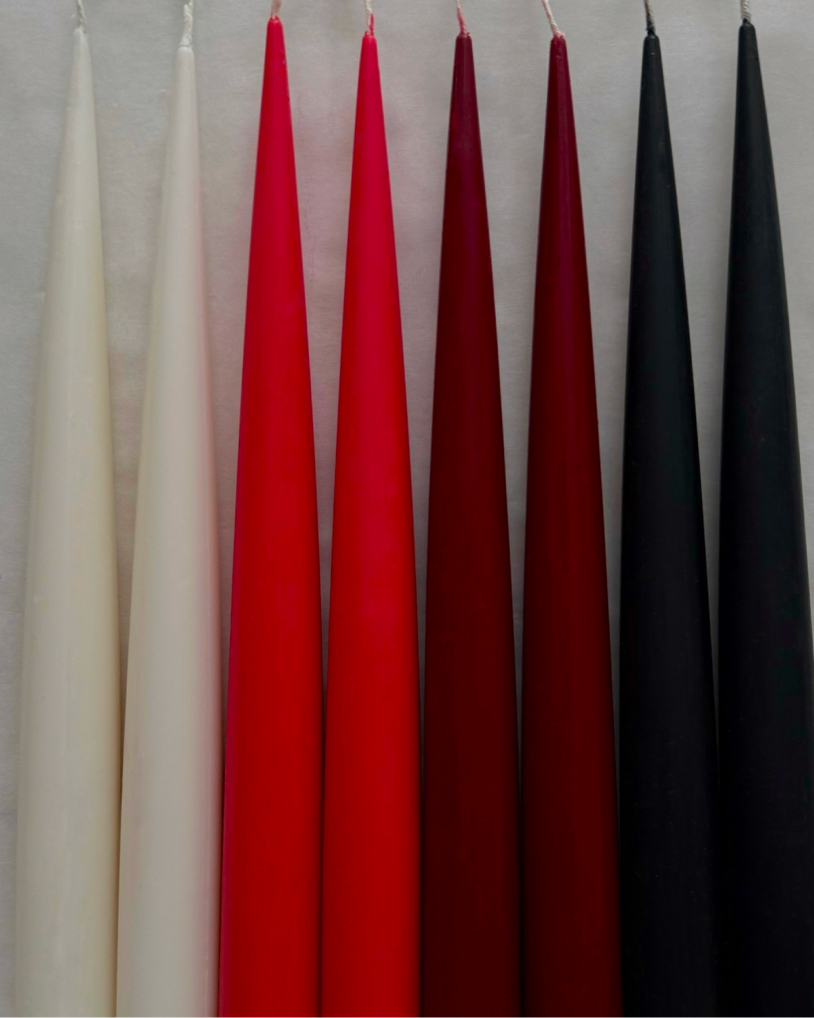
The first collection began with tall taper candles designed for dining tables and contemporary interiors. Their simple silhouette created a natural canvas for colour, with four original shades forming the foundation of the collection. Soft Ivory represents stillness, Vivid Red reflects love, Deep Burgundy expresses passion, and Jet Black captures the quiet depth of night. Each shade was given its own identity, establishing the original PLAMYA palette.
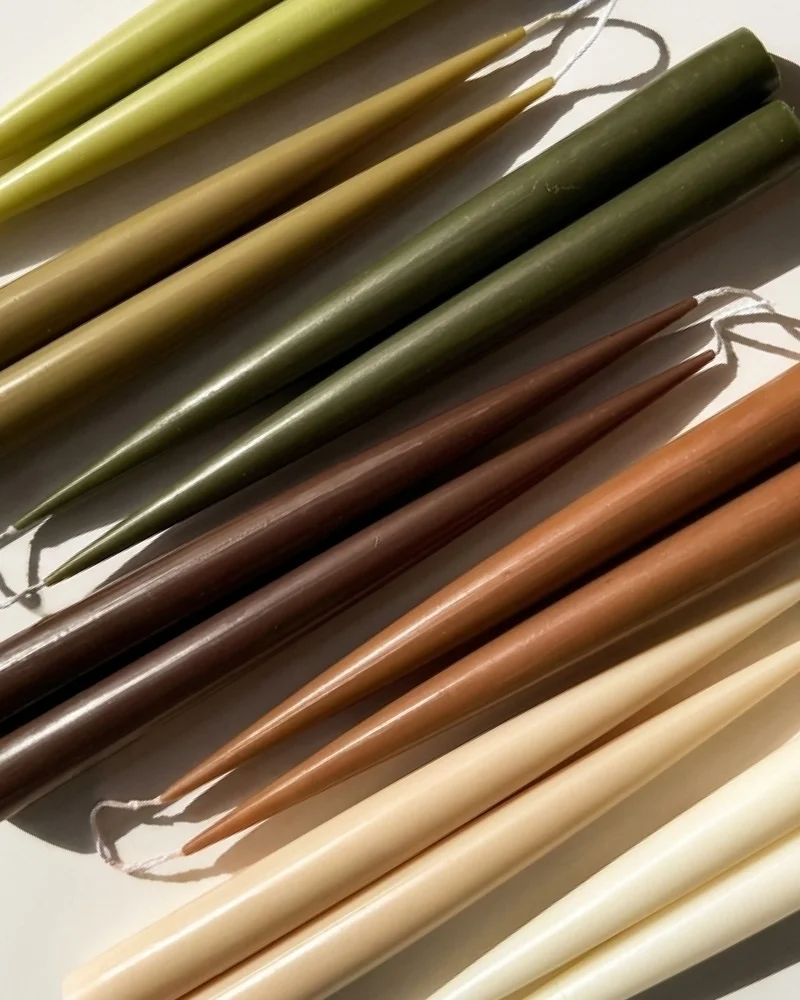
As the collection grew, the palette expanded into earth-inspired tones drawn from clay, moss, stone, ash and weathered surfaces. These quieter shades were developed to work naturally across different interiors and alongside the original colours. Together, they create combinations that can feel subtle, expressive or distinctly graphic. Colour remains one of the defining elements of PLAMYA.
Nature continues to guide
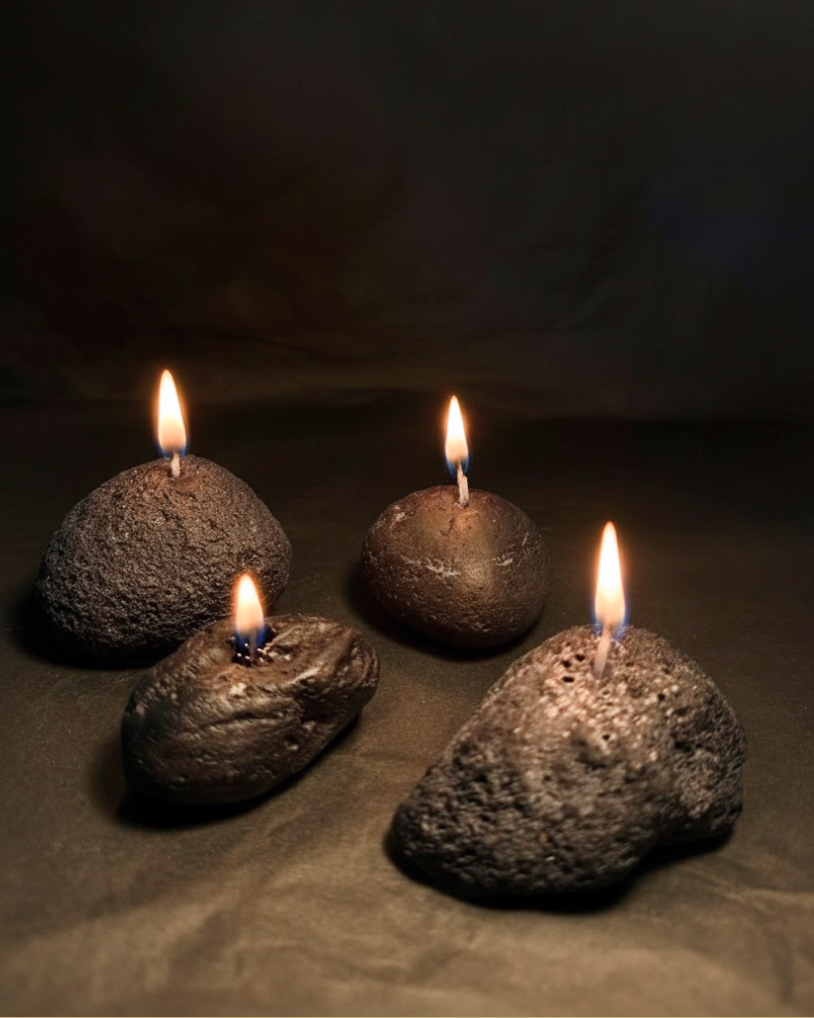
The Volcanic Stone collection grew from the landscapes of Tenerife. Cooled lava, porous stone and irregular textures became the starting point for an exploration of form in wax.
Each piece preserves the asymmetry, texture and surface character of volcanic rock, creating tactile, sculptural objects with a distinctly architectural presence.
The work behind each piece
The wax composition is developed specifically for each design. Taper candles require an even burn and controlled wax flow. Sculptural pieces require structural stability and precise reproduction of surface detail.
Each formula is refined through repeated testing to achieve the intended behaviour of the finished candle.
Every candle is hand-poured and hand-finished in London in small batches. Each piece is individually refined and checked for surface quality, colour consistency, wick positioning and finish. Subtle variations naturally occur throughout the process, giving each finished piece its individual character.

Tanya develops every PLAMYA colour and wax blend, and makes each candle by hand in the London studio.
Our storyPublished 14 July 2026 · Updated 12 October 2026